- The Paris Love Letter
- Posts
- 🇫🇷 💌 The Paris Love Letter #148
🇫🇷 💌 The Paris Love Letter #148
Paris on Rainy Days + “Je vous en prie" + M - Qui De Nous Deux

James Christopher Knight
March 06, 2026
In partnership with

In This Issue of The Paris Love Letter
Linking You To Paris: Links to Helpful & Fun Articles About Paris
Eating in Paris: The Quiet Drama of Paris’s Best Baguette
French Phrase of the Week: “C’est pas grave"
Featured French Song: Alain Souchon - Foule sentimentale

Linking You to Paris
➡️ The Allure of Classic Parisian Style: HiP Paris goes beyond clichés about stripes and red lipstick to show how classic Parisian style is really built on attitude, subtle imperfection, and small sensual details like lingerie, perfume, and the way clothes move on the body.
➡️ 14 Family-Friendly Paris Hotels That Go Above and Beyond for Kids: Condé Nast Traveler profiles Paris hotels that not only welcome children but bribe them into joy with teepees, cooking classes, treasure hunts, kids’ spas, mascot toys, and even in‑room “camping” setups so parents actually get a holiday too.
➡️ Our 5 Favorite Cocktail Bars in Paris: My French Country Home Magazine curates five cocktail bars where you get more than a good drink, from menu‑less, made‑to‑measure creations and hidden speakeasies to multi‑level Belle Époque salons that feel like stepping into a film.
➡️ Inside the cutthroat competition for the best baguette in Paris: The Washington Post takes you behind the scenes of the Grand Prix de la Baguette, inside flour‑dusted judging rooms and bakeries where “bread is god” and a single loaf can change a boulanger’s life with presidential contracts and city‑wide fame.
WEEKLY UPDATE
A Quick Merci

Last week I experimented with a new segment called French Phrase of the Week and the response was incredible. I want to thank everyone who hit reply to share their feedback because hearing from you is exactly how I can best tailor the Paris Love Letter to what you actually want to read. Because of that enthusiasm, the section is officially sticking around.
We have some exciting Paris adventures lined up for March, and I am looking forward to sharing them with you. For now, let us get into the bread, the downloadable map, and a phrase for when things do not go quite to plan.
EATING IN PARIS
The Quiet Drama of Paris’s Best Baguette
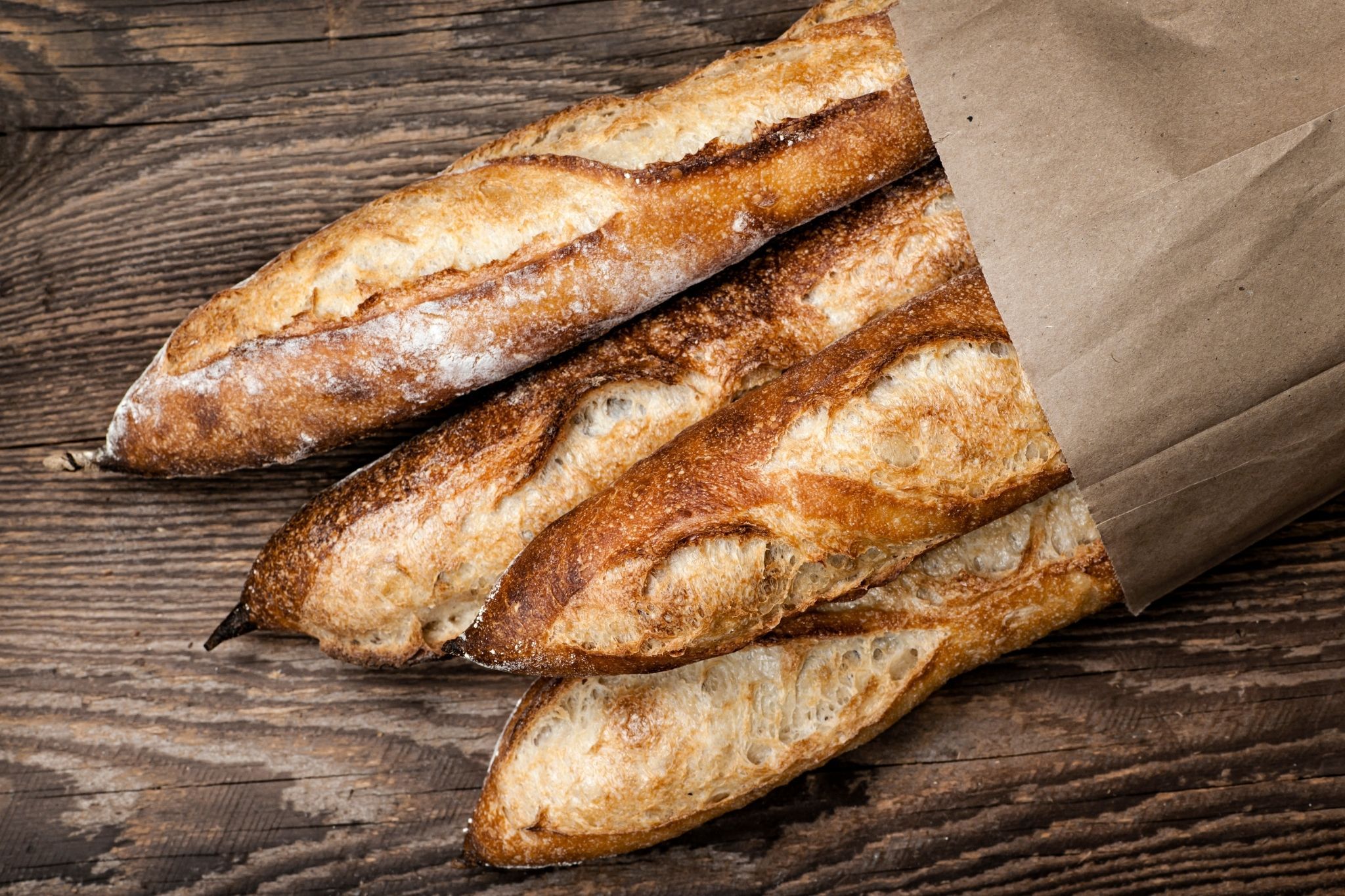
Each year in Paris, there is a competition that matters far more than any Michelin star or influencer listicle. It is the Grand Prix de la Baguette de Tradition Française de la Ville de Paris. There are no red carpets and no gowns. Instead, there is only flour, water, salt, yeast, and a jury of obsessed Parisians deciding who bakes the most perfect 70 centimeter piece of everyday poetry.
This year, the 2026 prize went to Sithamparappillai Jegatheepan, a baker at Fournil Didot in the 14th arrondissement. Out of 143 baguettes entered, his was judged the best on a brutally specific checklist. The jury looked at appearance, taste, baking, crumb, alveolation (the pattern of holes and air pockets inside the crumb of bread), size, and salt content. In other words, they judged how it looks, how it smells, how it sounds when you crack it, how the inside feels between your fingers, how the air pockets are distributed, and even how salty it is.
The reward is more than bragging rights. The winner takes home €4,000 and earns the right to supply bread to the Élysée Palace for a year. The president’s morning routine becomes your calling card.

A Very Parisian Obsession
The competition itself is relatively recent. It was created in the ‘90s when the city realized that even the humble baguette needed defending. Industrial baking and frozen dough were on the rise. The answer was to codify and celebrate the baguette de tradition française and to honor the artisans who still make it the hard way.
That “tradition” label is a legal definition from a 1993 decree that quietly drew a line in the flour. To be a “tradition,” the bread must follow strict rules:
Only four ingredients are allowed: flour, water, salt, and yeast or natural leaven.
There are no additives, no preservatives, and no improvers.
The bread must be mixed, shaped, and baked on site in the bakery that sells it.
The dough can never be frozen at any point in its life.
Inside that narrow lane, there is all the room in the world for artistry. One baker will ferment the dough longer for a deeper flavor. Another tweaks hydration so the crumb is silkier and more open. A few seconds more or less in the oven and your crust shifts from pale gold to deep chestnut, or from whisper crisp to thundering crackle. The Grand Prix jury is essentially judging the results of a thousand tiny decisions you never see when you walk in and ask for "une tradition, s’il vous plaît."

What Makes a Great Baguette, Really?
If you want to play judge on your next trip, here is the unofficial, street level version of the criteria:
Look
Gently tapered ends and a rich golden brown crust are essential. It should not be pale or charcoal. The scoring on top, which are the diagonal slashes, should open like relaxed little mouths rather than exploding or staying welded shut.
Sound
Give it a delicate squeeze. A good baguette crackles and sings back to you. It should sound alive rather than like packing foam.
Smell
Bring it to your nose before you even tear it. You should catch wheat, a hint of nuttiness, and perhaps a whisper of fermentation instead of just hot air.
Crumb and Alveolation
When you break it open, the interior should not be cottony or dense. A great tradition has irregular air holes, some big and some small, like a map of constellations. The crumb should be slightly glossy, elastic, and almost creamy.
Taste and Salt
It is amazing how often this is off. Too bland and it tastes like nothing. Too salty and it bulldozes whatever you put on it. The best baguettes have a gentle tang from fermentation, a lingering wheat flavor, and salt that supports rather than shouts.
This is what the Grand Prix tries to codify each year. It is not just good bread, but the Platonic ideal of everyday Paris bread.
A Moving Map of Parisian Bread

Click the image to download the Google Map
One of the quiet pleasures of this competition is watching how it reshapes the map of Paris over time. The best baguette does not always live in the postcard neighborhoods. Some years it is the 10th or 20th, and other years it is a quiet stretch of the 14th, like this year’s winner at Fournil Didot.
A prize like this can change a bakery’s life overnight. Lines form, locals grumble affectionately about their boulangerie being discovered, and the winner suddenly has to keep up with the demand of both neighbors and pilgrims with suitcases.
To help you trace that story, I have put together an interactive Google Map of all the first place winners since the beginning of the competition. You can wander across the years, arrondissement by arrondissement, and see how the city’s best baguette has migrated.
If you are planning a trip, you can build your own Grand Prix crawl. Pick a few former winners in neighborhoods you are already visiting and let the bread dictate your walking route.
If you are already in Paris as you read this, you are holding the beginnings of a very noble mission. Go find Fournil Didot in the 14th, order "une tradition," and see if you agree with the jury. You do not need a white lab coat or a scoring sheet. You only need your eyes, your nose, your hands, and a city that still takes its daily bread seriously enough to turn it into an annual civic ritual.
Women-led adventures that make a difference

Peru, Bhutan and Cambodia. That’s where Intrepid, the world’s largest adventure travel company, has launched three new Women’s Expeditions.
These small-group trips are designed exclusively for women, creating space to connect, explore and support local women-led businesses along the way.
Trek the lesser-known Chinchero to Urquillos route in the Peruvian Andes with an all-female crew. Discover Cambodia’s street food scene on a women-run tuk tuk tour. Unwind with a traditional herbal hot stone bath at a women-owned farmhouse in Bhutan.
Every trip is led by an expert female guide and built around meaningful, immersive experiences.
FRENCH PHRASE OF THE WEEK
“C’est pas grave"

A little coffee spill and a quick “C’est pas grave” to remind us that a small mishap is just an excuse for a kind word.
The Phrase: "C’est pas grave"
Phonetic: [say pah grav]
The Formal Version: "Ce n’est pas grave" (You’ll see this in books, but you’ll rarely hear it spoken this way in the wild.)
The Context:
This one brings more civility and kindness to the streets. It literally translates to “it’s not serious,” but in practice, it means anything from “no worries” to “don’t beat yourself up about it.” You’ll hear it when you apologize for a small mistake, show up two minutes late, or accidentally bump into someone while navigating a crowded sidewalk.
How to use it:
The Metro Fumble: You accidentally brush someone’s shoulder and blurt out, “Pardon !” If they are in a good mood, they will wave it off with a quick “C’est pas grave.”
The Café Spill: Your server drops a spoon and apologizes with a quick “Désolé(e).” You can smile and say “C’est pas grave” to signal that we are all human here.
For example:
Today, while on a walk, our dog darted after a pigeon and pulled his leash across the sidewalk, blocking the path of a couple. I apologized for the small inconvenience caused by my “squirrel” triggered pup. The gentleman, acknowledging my apology, waved a hand and said with a smile, “c’est pas grave!”
FRENCH SONG OF THE WEEK
Alain Souchon - Foule sentimentale
This is one of those songs that lives somewhere in the collective French spine. “Foule sentimentale” is a soft, slightly melancholy anthem about how easy it is to get lost in shiny distractions and how much we need real, simple things instead.
It is a good soundtrack for a city that still argues passionately about something as basic as bread and insists that the everyday details of life are worth defending.
The Paris Love Letter is our way of sharing authentic Parisian experiences, hidden gems, and cultural insights while keeping the newsletter free for our readers. To help cover costs, we occasionally include affiliate links for products we genuinely use and recommend at no extra cost to you. We also create our own fine art photo prints, Paris walking tours, and guides to share the beauty and stories of Paris we love. We never take commissions from restaurants. All our recommendations are based on honest experience and genuine appreciation for this city.