- The Paris Love Letter
- Posts
- 🇫🇷 💌 The Paris Love Letter #151
🇫🇷 💌 The Paris Love Letter #151
Canal Walks and Secret Square Picnics + Why the Chairs Face the Street + “Pas Mal" + Renaud - Woodkid & Louis Garrel - L'aérogramme de Los Angeles

James Christopher Knight
March 27, 2026
In This Issue of The Paris Love Letter
This Week in Paris: Canal Walks and Secret Square Picnics
Linking You To Paris: Links to Helpful & Fun Articles About Paris
Eating in Paris: Why the Chairs Face the Street
French Phrase of the Week: “Pas Mal"
Featured French Song: Woodkid & Louis Garrel - L'aérogramme de Los Angeles

THIS WEEK IN PARIS
Canal Walks and Secret Square Picnics
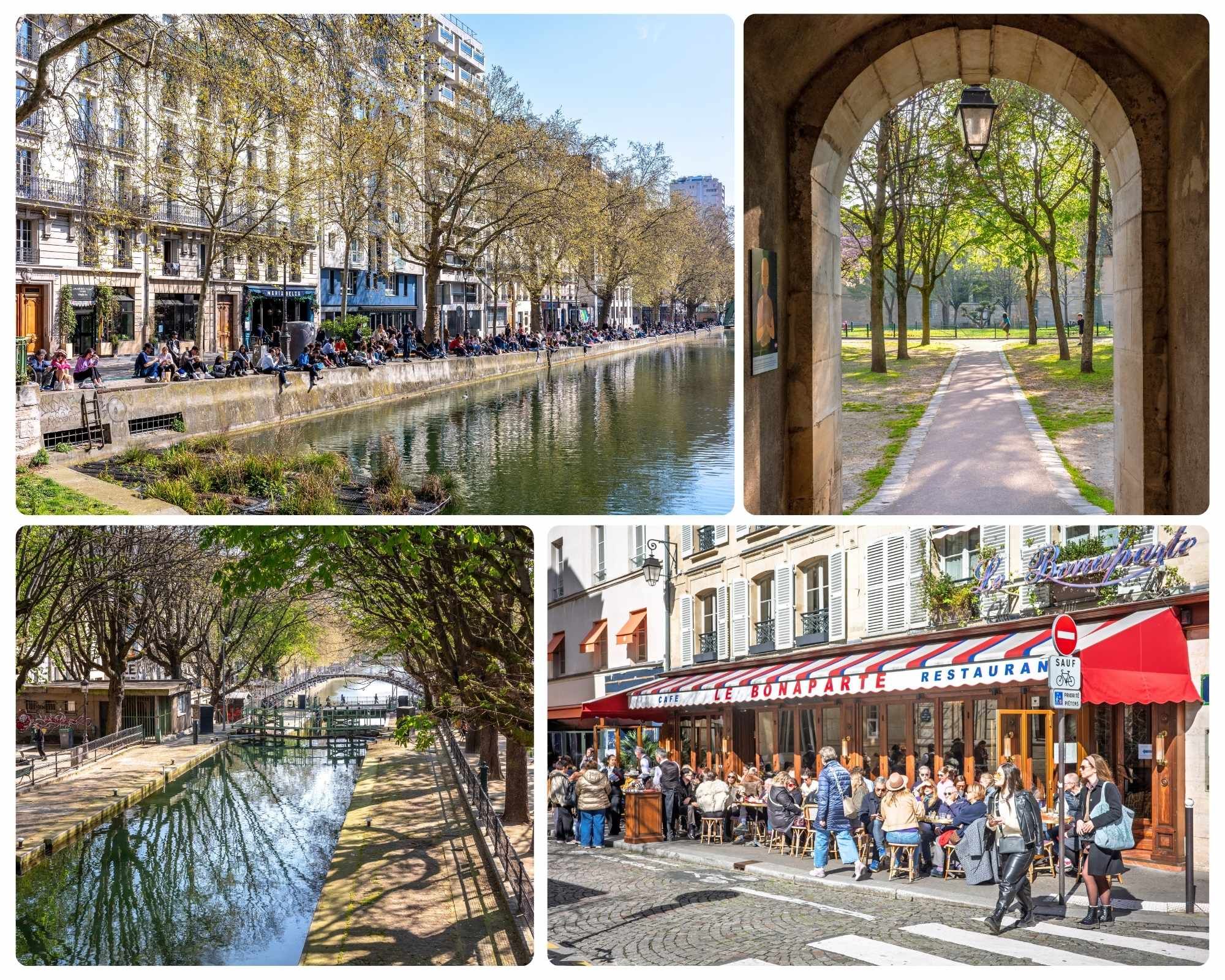
This week in Paris, the sun finally decided to stay. We spent a lot of time walking along the Canal Saint-Martin. I love the photo of everyone gathered along the water's edge. It is one of those sights that makes the city feel alive. When the weather is like this, the cafes in Saint-Germain fill up instantly. I caught a shot of the terrace at Le Bonaparte in the Sixth Arrondissement. It is the perfect spot to sit and watch the world go by.
We also found time for a picnic with our friend, the Mystery Parisian. We went to a beautiful secret square hidden inside the Hôpital Saint-Louis in the Tenth Arrondissement. It is a quiet, walled-in park right in the middle of the hospital grounds, just a short walk from the canal. It feels like a private escape from the rest of the city. It was the highlight of our week to sit there in the sun and catch up.
Linking You to Paris
➡️ Must-do activities in Paris this weekend: Paris Secret rounds up a surprisingly broad mix of weekend ideas, from a former prison turned grand library to a royal park with Eiffel Tower views, so it is less a generic event list than a fast-moving snapshot of how many different versions of Paris you could step into this weekend.
➡️ How to Spend 4 Days in Paris, According to Locals: AFAR’s long-weekend guide is useful not just for where it sends you, but for how it frames the city, encouraging readers to skip checklist Paris in favor of long lunches, neighborhood wandering, covered passages, markets, and the kind of spontaneous pleasures that make the city feel local.
➡️ The Best Vintage Stores in Paris: Vogue’s guide to vintage shopping in Paris is really a map of the city’s evolving secondhand scene, moving well beyond dusty treasure hunts into highly curated boutiques where designer pieces, recent seasons, and distinct points of view matter as much as nostalgia.
➡️ The best hotels to stay in Paris for 2026: Time Out’s hotel roundup is more than a luxury list because it organizes Paris through mood and neighborhood, helping readers choose between places that are romantic, design-forward, budget-friendly, or deeply local rather than simply the most expensive room with a view.
EATING IN PARIS
Why the Chairs Face the Street
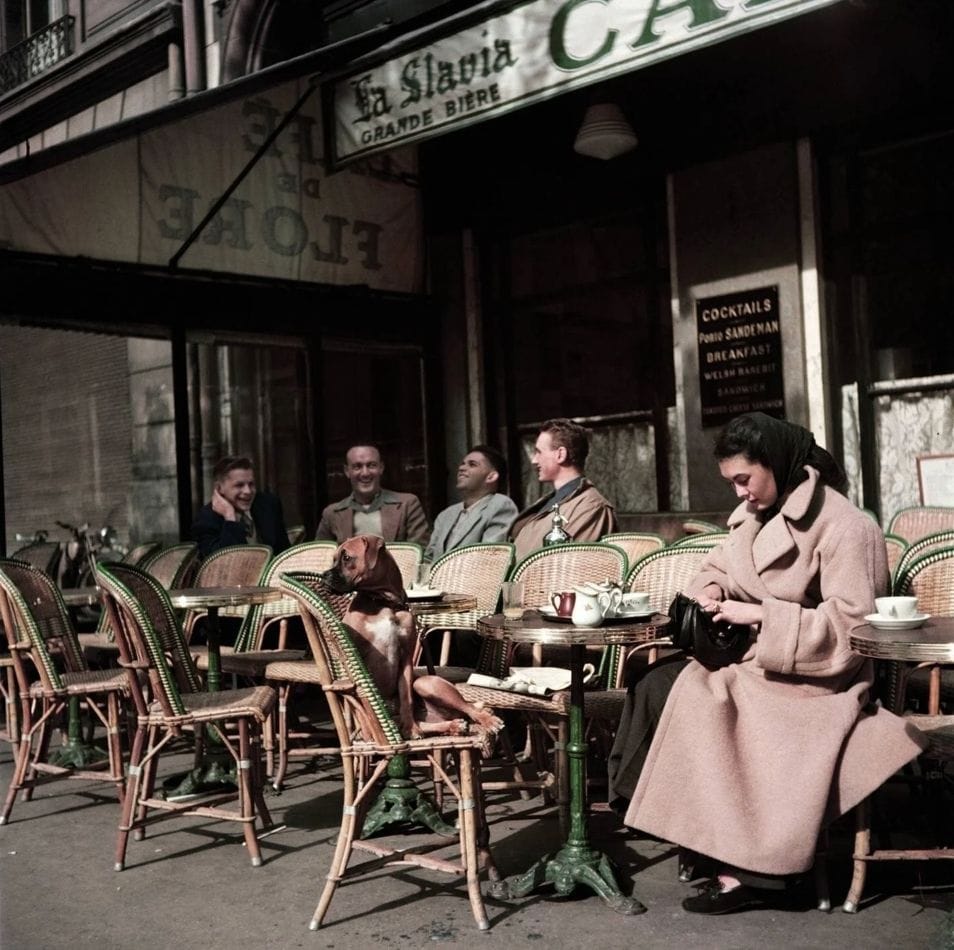
Robert Capa - Cafe de Flore, 1950s
You notice it almost immediately in Paris. The chairs on the terrace often don't face each other. They face the street.
Sit down at nearly any café in the city, and you find yourself shoulder to shoulder with strangers, all of you looking outward like an audience in a theater. This setup is a direct result of how Paris was physically rebuilt in the 1850s and 60s.
Before that time, Paris was a dense maze of dark, narrow medieval streets. There was no room for sidewalks, let alone terraces. Cafés were mostly indoor affairs. They were dim, smoky, and hidden away from the mud and chaos of the alleys.
That changed when Baron Haussmann began his massive renovation of the city under Napoleon III. He sliced wide, grand boulevards through the old neighborhoods, creating the light, air, and expansive stone pavements we see today. For the first time, there was actual physical space to move the furniture outside.

Ilya Repin - Parisian Cafe, 1875
The café owners took advantage of this new "urban stage" immediately. They realized that the boulevard itself was the main attraction. By turning the chairs toward the sidewalk, they turned the act of drinking coffee into a spectator sport.
This shift changed the social fabric of the city. Writers like Émile Zola and later Hemingway or Simone de Beauvoir went to be "alone in public." The terrace became a front-row seat to the theater of the everyday.
It is a specific kind of Parisian limestone-and-wicker philosophy. Instead of being tucked away in a corner or hidden inside, you are planted firmly alongside the action, watching the woman with the baguette, the waiter with the silver tray, and the light hitting the zinc bar through a window across the street.
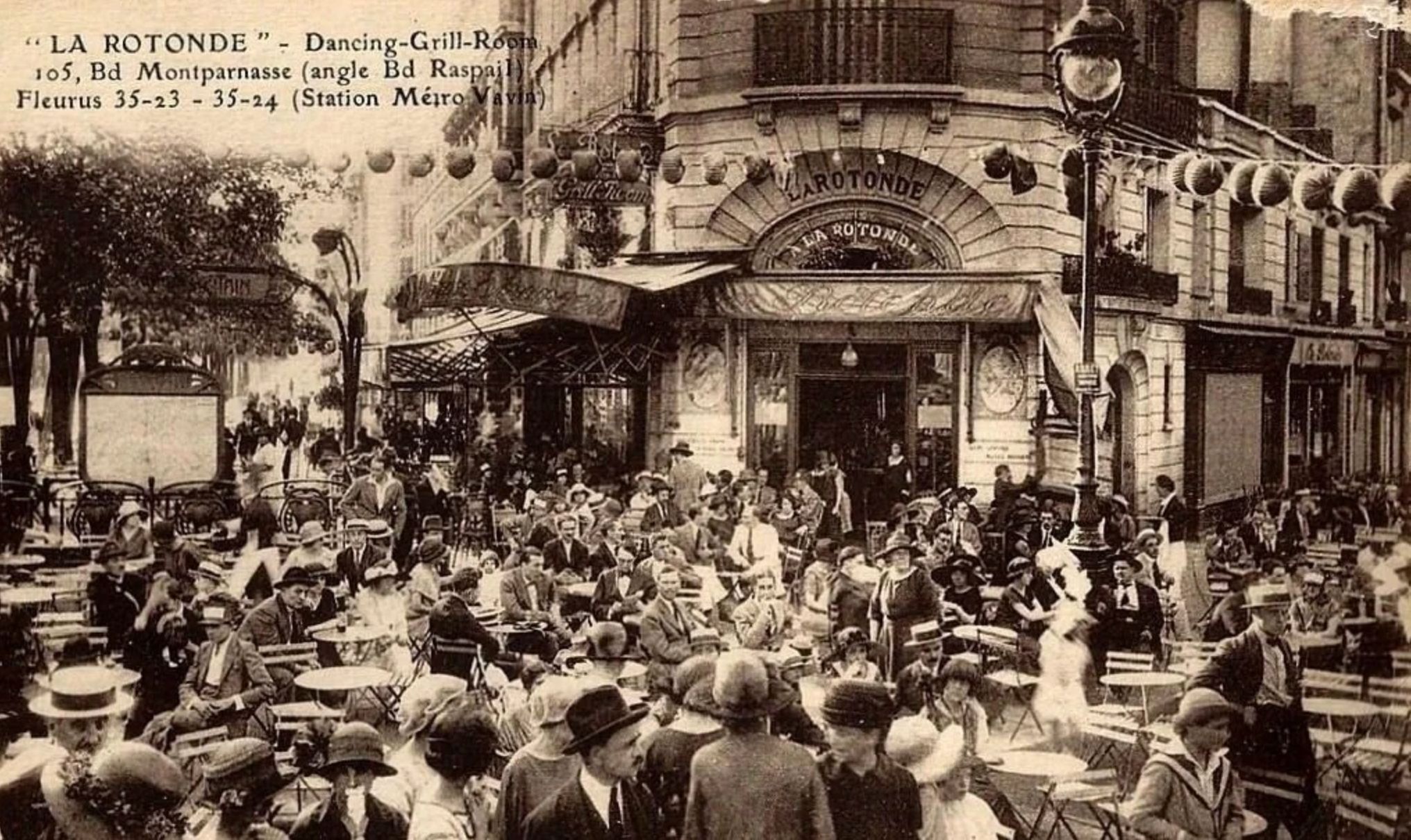
La Rotonde circa 1925
In a city that can feel fast and overwhelming, these outward-facing chairs offer a simple permission. You can stop moving, order a single espresso, and let the entire city of Paris perform for you.
FRENCH PHRASE OF THE WEEK
“Pas Mal"
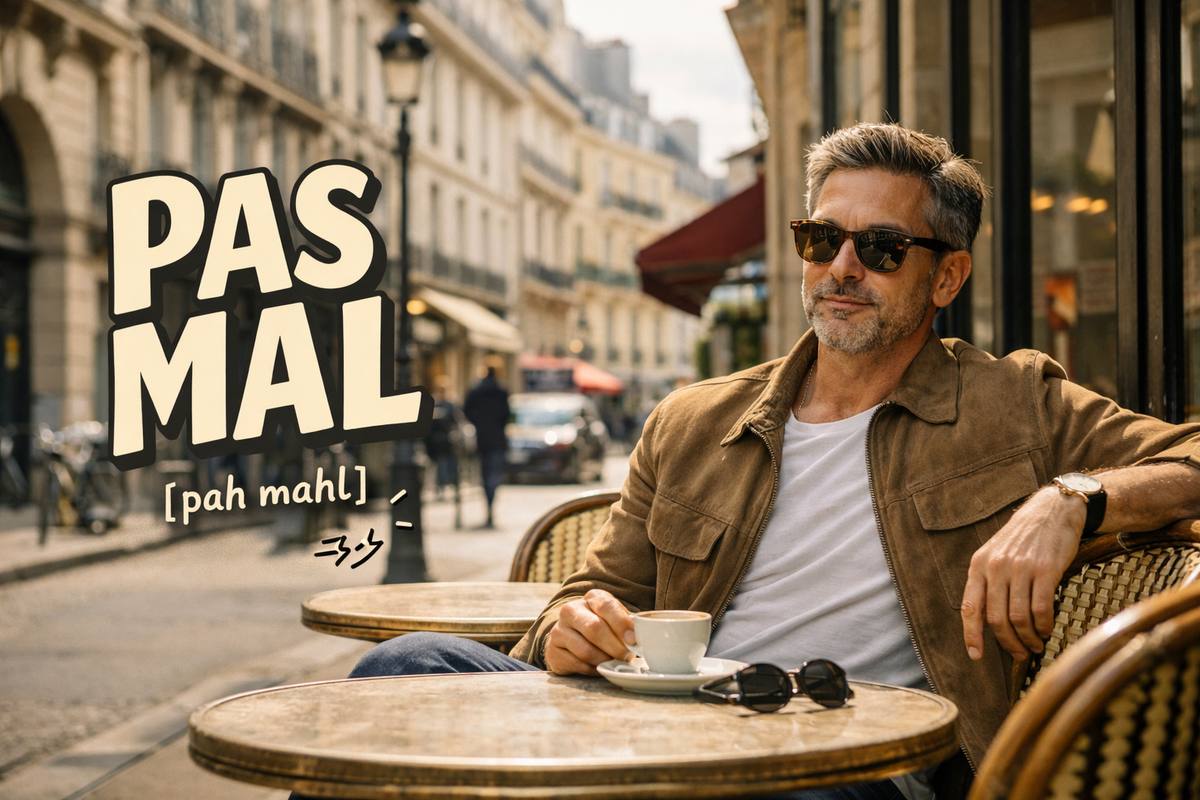
The Phrase: "Pas mal"
Phonetic: [pah mahl]
Literally: "Not bad."
The Context: In English, "not bad" can sometimes sound lukewarm. In French, "Pas mal" is actually a high compliment. The French love understatement. If something is incredible, they won't always gush; they’ll just nod and say it’s "not bad."
How to use it:
The View: You’re standing on the Pont des Arts at sunset and the light hits the Louvre just right. Pas mal.
The Wine: You take the first sip of a $90 bottle of Bordeaux that actually lives up to the price tag. Pas mal.
The Apartment: You walk into a friend’s place and realize they have a private terrace overlooking the Pantheon. Pas mal.
How I Found This Phrase: I used to think people were being unimpressed until I realized that "Pas mal" is often the highest praise a Parisian will give. It’s the art of the "cool" compliment.
FRENCH SONG OF THE WEEK
Woodkid & Louis Garrel - L'aérogramme de Los Angeles
This week’s selection is L'aérogramme de Los Angeles by Woodkid and Louis Garrel. Woodkid is a celebrated French director and musician known for his cinematic style, while Louis Garrel is one of France’s most recognizable actors.
The song is a beautiful, spoken-word piece set against a melodic backdrop, originally written by the legendary Yves Simon. It feels like a private conversation or a letter being read aloud.
The Paris Love Letter is our way of sharing authentic Parisian experiences, hidden gems, and cultural insights while keeping the newsletter free for our readers. To help cover costs, we occasionally include affiliate links for products we genuinely use and recommend at no extra cost to you. We also create our own fine art photo prints, Paris walking tours, and guides to share the beauty and stories of Paris we love. We never take commissions from restaurants. All our recommendations are based on honest experience and genuine appreciation for this city.